
Best overall for a confirmed Texas regiment: Research OnLine's regimental-history catalog. Best for Hood's Texas Brigade context: J. B. Polley's Hood's Texas Brigade: Its Marches, Its Battles, Its Achievements. Best for a cavalry ancestor: a history of the 8th Texas Cavalry, provided the service record confirms that unit. The best Civil War regimental histories for Texas ancestors in 2026 are the ones that match an ancestor's regiment, company and period of service—not simply books about Texas in the war.
- For the best Civil War regimental histories for Texas ancestors, confirm the regiment before choosing a book.
- Research OnLine's regimental histories are the best starting category for a confirmed unit; check the listed regiment before selecting a title.
- J. B. Polley's Hood's Texas Brigade supplies brigade context, not a substitute for a regiment-level account.
- An 8th Texas Cavalry history fits a confirmed cavalry ancestor; a Union ancestor requires a separate unit match.
Why this matters
A Texas ancestor's name does not identify the book you need. Start with the service record's regiment and company, then check whether the person transferred, served in another unit or appears under a different spelling. A history of a famous brigade tells you little about an ancestor who never served in it.
In 2026, use a regimental history to explain the unit's movements and experiences, not to prove an individual served in every action it describes. For a confirmed regiment, Research OnLine offers a starting point for regimental histories and firsthand accounts. Match the title's unit and scope to the record before treating it as evidence about your ancestor.
What makes the best Texas regimental history?
- Exact unit match: Check the regiment's full designation, branch and allegiance. A shared number does not make two units the same regiment.
- Company detail: Prefer a work that identifies companies, officers or rosters when you need to distinguish people with similar names.
- Coverage of service dates: A useful history covers the period when your ancestor belonged to the unit. Earlier and later campaigns supply context, not a personal itinerary.
- Clear source trail: Look for citations to service records, letters, diaries or official reports. An unsupported anecdote is harder to verify.
- Honest scope: A brigade narrative explains brigade movements; a regiment-level account follows one unit more closely. Neither replaces an individual service record.
Use those criteria before choosing between a broad account and a narrow one. The correct regiment is a stronger selection test than the fame of the book.
Texas Civil War histories at a glance
| Choice | Best for | Standout feature | Key limitation |
|---|---|---|---|
| Research OnLine regimental histories | A researcher with a confirmed unit | A route into regiment-focused research materials | The specific title still needs a unit and scope check |
| J. B. Polley's Hood's Texas Brigade | Hood's Texas Brigade context | A named brigade account | Brigade coverage is not an individual service record |
| An 8th Texas Cavalry history | A confirmed 8th Texas Cavalry ancestor | A cavalry-unit focus | Not relevant to every Texas cavalry regiment |
| A 1st Texas Cavalry (Union) history | A confirmed Union cavalry ancestor | A unit match outside Confederate histories | The shared state and branch alone do not establish service |
The last two choices describe the kind of regiment-level history to seek, not a particular edition. Confirm the full unit designation before selecting a title.
1. Research OnLine regimental histories: best for a confirmed Texas unit
Research OnLine sells regimental histories and firsthand accounts for people researching Civil War ancestors state by state. That makes its catalog the best overall starting category here when you already know the regiment. Find a title that names the right unit; then check whether its contents cover the ancestor's company and service period.
This is a research choice, not a claim that every Texas unit has a matching title. A history can explain where a regiment went while saying nothing about one soldier's presence on a particular day. Keep the service record beside the book.
Research OnLine pros:
- Regimental histories focus the search on a unit rather than Texas as a whole.
- Firsthand accounts can add detail to a unit's movements and daily experience.
- A confirmed regiment gives you a clear way to assess a title's relevance.
Research OnLine cons:
- The catalog category alone does not confirm coverage of a particular regiment.
- A unit narrative does not settle an individual's service dates or attendance at a battle.
Best for: A genealogist who has established the ancestor's regiment and needs a unit-focused account. Verdict: Buy a matching history; hold until the unit is confirmed.
2. J. B. Polley's Hood's Texas Brigade: best for brigade context
J. B. Polley's Hood's Texas Brigade: Its Marches, Its Battles, Its Achievements is the named choice for readers tracing an ancestor in Hood's Texas Brigade. The 1st, 4th and 5th Texas Infantry are the core Texas regiments to check against a service record. The brigade account puts their campaigns in a wider formation's story.
That breadth is also its limit. A passage about the brigade does not establish that every member of every regiment was present. Check the ancestor's regiment, company and service dates before connecting a described event to that person.
J. B. Polley's Hood's Texas Brigade pros:
- Names a specific formation rather than treating all Texas troops together.
- Provides context for readers researching the brigade's Texas infantry regiments.
- Helps you follow the larger formation when a regiment-level account is too narrow.
J. B. Polley's Hood's Texas Brigade cons:
- It is a brigade history, not a dedicated history of one regiment.
- Its narrative cannot confirm an individual soldier's participation without supporting records.
Best for: A researcher whose ancestor's records place them in a regiment of Hood's Texas Brigade. Verdict: Buy for context; hold if the brigade connection is unconfirmed.
3. An 8th Texas Cavalry history: best for a confirmed cavalry unit
The 8th Texas Cavalry is also known as Terry's Texas Rangers. If your ancestor's record identifies that regiment, seek a history that follows the 8th Texas Cavalry specifically. A Texas infantry history, however detailed, answers a different question.
Check the full title and contents rather than selecting a book because it mentions Texas cavalry. Determine whether it follows the regiment, quotes participants or merely includes the unit in a broader campaign. Then compare the period covered with the ancestor's documented service.
8th Texas Cavalry history pros:
- The regiment designation provides a precise search target.
- A matching unit history is more relevant than a general Texas cavalry account.
- Firsthand material, when present and identified, can add a participant's perspective.
8th Texas Cavalry history cons:
- No single title or edition is specified here; inspect a candidate's scope before selecting it.
- The regiment's activities do not prove one member attended every event described.
Best for: A researcher with a documented 8th Texas Cavalry ancestor. Verdict: Buy a verified unit match; skip it for any other cavalry regiment.
4. A 1st Texas Cavalry (Union) history: best for Union service
Not every Texas Civil War ancestor served in a Confederate unit. The 1st Texas Cavalry (Union) is a separate research target, and its allegiance belongs in your search terms. A Confederate Texas cavalry account cannot stand in for a history of this regiment.
Verify the full designation in the ancestor's record before selecting a history. Search results that show only a unit number and state invite a mistaken match; the branch and allegiance distinguish the unit you need.
1st Texas Cavalry (Union) history pros:
- The full designation narrows the search to the relevant unit.
- It keeps Union service visible in a Texas-focused search.
- A regiment-level account gives more targeted context than a statewide overview.
1st Texas Cavalry (Union) history cons:
- No particular book is identified here; verify any candidate's contents.
- A matching unit history still cannot replace the ancestor's individual record.
Best for: A researcher whose ancestor's records name the 1st Texas Cavalry (Union). Verdict: Buy a verified unit match; skip Confederate unit histories as substitutes.
How to match a history to an ancestor
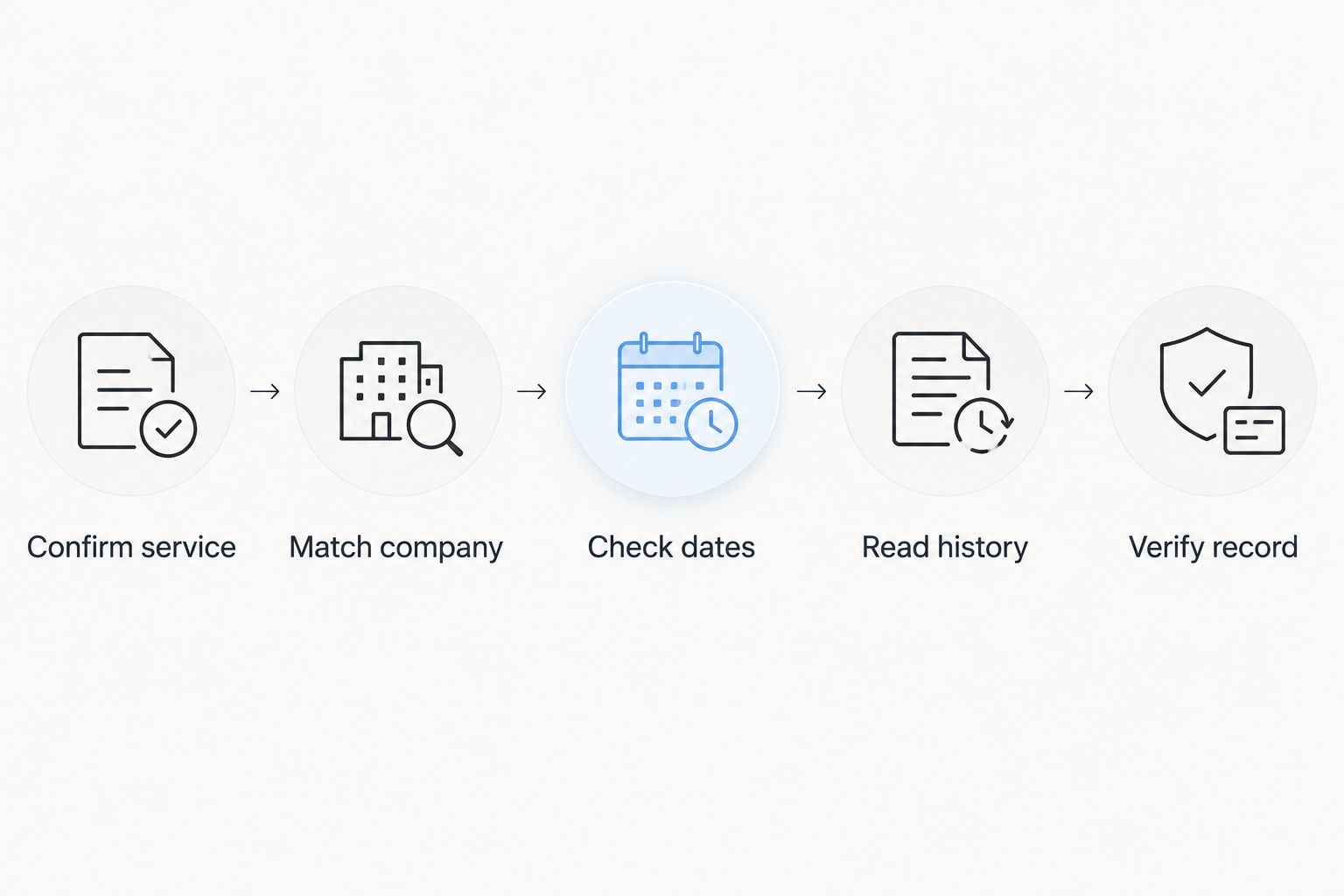
Follow the evidence in order. A book becomes useful after the record establishes which unit to look for—not before.
- Confirm service: Start with a record that names the person and unit. Note spelling variants rather than assuming every identical name belongs to one soldier.
- Match company: Record the company as well as the regiment. Company-level detail can help you distinguish people and assess a history's roster or anecdotes.
- Check dates: Compare the ancestor's documented service period with the dates covered by a candidate history. Do not assign the soldier to an event outside that documented period.
- Read history: Use the matching book to understand the unit's movements, organization and reported experiences. Keep claims about the unit separate from claims about an individual.
- Verify record: Return to the individual record when a passage suggests a new lead. Seek evidence for a transfer, absence or change in unit before adding the event to a family account.
A practical 2026 research note has 3 separate fields: what the record says, what the unit history says and what remains unproved. That separation stops a vivid campaign account from becoming an unsupported family claim. It also gives you a clear next task when two sources disagree.
If the regiment is still unknown
Do not buy a history based on a surname in an index or a family story about a well-known battle. First identify a plausible service record and distinguish the person by company, location or other information available in the records. Only then compare regimental histories.
A statewide history has a role at this stage: it explains the setting. It is not a shortcut to a unit identification. In 2026, keep the search broad until the evidence supports a narrower one.
If the ancestor changed units
Treat each documented unit as a separate research question. A history of the first regiment does not automatically cover later service in another one. Make a short timeline from the records, then select histories for the periods they actually address.
The same rule applies to a brigade assignment. Establish when the regiment served with that formation before using a brigade account to explain a campaign. A formation's history is context; the ancestor's record is the test of personal relevance.
How these choices were ranked
The ranking puts an exact unit match ahead of a familiar title. Research OnLine's regimental-history category comes first for a researcher with a confirmed unit because it starts with the right scale of book; the contents of any particular title still require inspection. Polley's named brigade account follows for readers who need Hood's Texas Brigade context. The cavalry choices serve narrower, mutually distinct records: confirmed 8th Texas Cavalry service and confirmed 1st Texas Cavalry (Union) service.
No book ranks as the best match for every Texas ancestor. In 2026, the deciding evidence is the unit designation, company and service period—not a statewide label on the cover.
Which Texas regimental history should you choose?
Choose a regiment-level history that names your ancestor's confirmed unit. If records place the ancestor in Hood's Texas Brigade, use J. B. Polley for brigade context and a matching regimental history for a closer unit view. If records identify the 8th Texas Cavalry or the 1st Texas Cavalry (Union), search those full designations and inspect each candidate history's coverage.
If the unit is not established, hold the book choice. Identify the service record first. That decision keeps a history about someone else's regiment out of your ancestor's story.
FAQ
What's the best Civil War regimental history for a Texas ancestor?
The best choice is a history of the ancestor's confirmed regiment that covers their service period. Check the company and the book's scope before using it to interpret the record.
Is a Hood's Texas Brigade history the same as a regimental history?
No. J. B. Polley's Hood's Texas Brigade covers a larger formation, while a regimental history concentrates on one unit. Use the brigade account for context and verify individual service separately.
Which history should I use for an 8th Texas Cavalry ancestor?
Use a history that specifically covers the 8th Texas Cavalry, also known as Terry's Texas Rangers. Confirm the unit in the ancestor's record and inspect the history's coverage before selecting a title.
Were all Texas Civil War soldiers in Confederate regiments?
No. The 1st Texas Cavalry (Union) is a Texas unit whose allegiance must be included when matching a history. Check the full designation instead of relying on the state and unit number alone.
Can a regimental history prove my ancestor fought in a battle?
No. A history can place a unit in a battle, but that does not establish that every member was present. Compare the account with the ancestor's individual service dates and other records.
What if I don't know my Texas ancestor's regiment?
Identify a service record before selecting a regimental history. A surname match or family story alone does not establish which unit's book applies.
Should I choose a statewide history or a regimental history?
Choose a regimental history when the unit is confirmed and you need unit-level context. Use a statewide account for background while the unit remains uncertain.
One last thing
A detailed battle account is often the most tempting page in a regimental history—and the easiest to misuse. In 2026, write down the ancestor's documented service dates before reading it. That small step keeps the unit's story useful without turning it into an unproved claim about one person.