Best overall for a known Georgia unit: a unit-specific regimental history. Best for identifying a possible soldier: the Roster of the Confederate Soldiers of Georgia. This 2026 guide compares those sources with military service records, pension applications, and official reports; Research OnLine is best for readers seeking published regimental histories and firsthand accounts after they have identified a unit.
- The best Civil War regimental histories for Georgia ancestors are histories of a verified unit, not books chosen by surname alone.
- Research OnLine is best for finding published regimental histories and firsthand accounts once you know the unit.
- Start with theGeorgia Civil War Soldiers Index - www.researchonline.net/gacw/search/searchga.php when a Confederate ancestor's unit is uncertain.
- Check a proposed match against military service records before using a regimental history as family evidence.
Why this matters
A regimental history follows a unit. Your question concerns one person. The connection between them must be established before the book can tell you anything reliable about your ancestor.
In 2026, build that connection with a short identification sheet. Keep 1 soldier per sheet, compare 2 independent records where you can, and record 3 identifying details: name, unit, and a place associated with the person. A matching surname alone does not establish that the person in a roster is your relative.
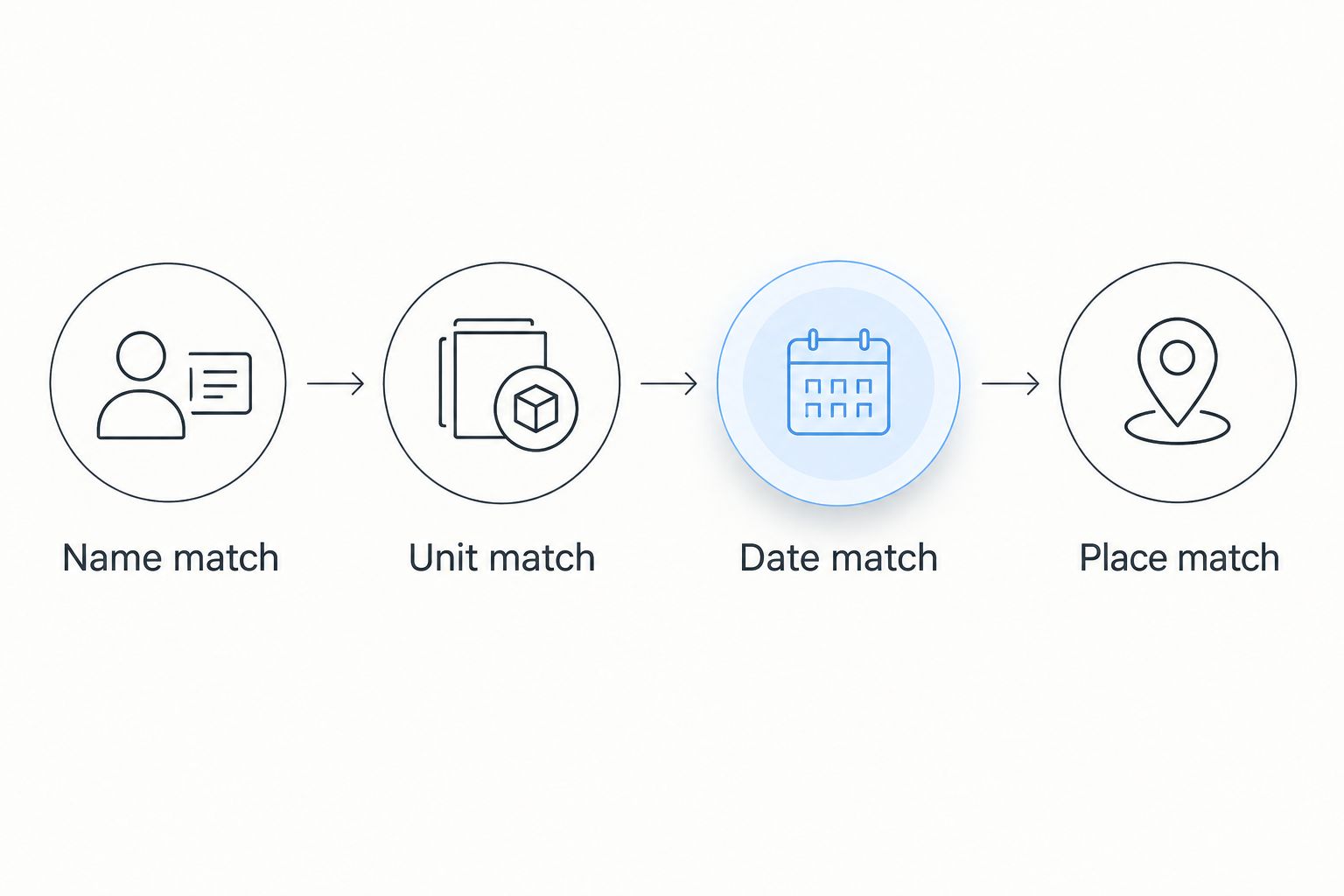
Use these checks in order:
- Name match: Include initials, alternate spellings, and other names found in family records.
- Unit match: Write down the regiment and company exactly as each record gives them.
- Date match: Compare service events with what you know about the person's life.
- Place match: Compare residence or another recorded place, without assuming that a Georgia soldier was born in Georgia.
A conflict is useful. If a family record and a military record name different companies, stop and resolve it before choosing a book. A history of the wrong company can produce a convincing account of someone else's war.
What makes the best Georgia regimental history?
For a Georgia ancestor, the best source is the one that answers your current research question. Apply these criteria before selecting a history or treating any passage as family evidence:
- Unit specificity: Does it cover the identified regiment or battalion rather than Georgia troops generally?
- Company detail: Does it help distinguish your ancestor's company from others in the unit?
- Named evidence: Does it identify individuals, or does it mainly recount the unit's movements?
- Source trail: Can you tell whether an assertion comes from a record, a participant's account, or a later narrative?
- Conflict handling: Can you compare a claim against a service record, pension application, or other independent document?
- Research purpose: Do you need to identify a soldier, reconstruct service, or understand an engagement? Those are different jobs.
Do not rank a vivid battle narrative above a record that establishes identity. In 2026, the strongest reading order remains identification first, unit context second, and a return to the underlying records whenever the sources disagree.
Georgia Civil War research sources at a glance in 2026
| Source | Best for | Standout feature | Key limitation |
|---|---|---|---|
| Unit-specific regimental history | Understanding a verified unit | Sustained account of the unit's service | A unit narrative does not prove an individual's membership |
| Roster of the Confederate Soldiers of Georgia | Finding a possible Confederate soldier and unit | Georgia-focused name entries | A matching name is not a confirmed family match |
| Compiled military service records | Checking documented wartime service | Individual service-file material | Surviving paperwork varies by soldier |
| Georgia Confederate pension applications | Testing a postwar identification | Later personal and service claims | Not every soldier has an application |
| Official Records of the Union and Confederate Armies | Checking reported operations | Contemporary official correspondence and reports | Reports do not list every participant |
These are not interchangeable books. The first option supplies a sustained unit account; the other sources help determine whether you have the right unit and how much of that account applies to your ancestor.
1. Unit-specific regimental history: best for a verified unit
A history of your ancestor's verified Georgia regiment is the best Civil War regimental history for that ancestor. It can place the unit's movements, officers, and engagements in a connected narrative. A firsthand account offers a different viewpoint, but its author speaks from a particular position rather than for every soldier in the regiment.
Research OnLine sells regimental histories and firsthand accounts for Civil War research. Use the known unit to assess a relevant title; do not treat the presence of a Georgia surname or battle as proof that the book covers your relative.
Unit-specific regimental history pros:
- Keeps events tied to the unit you are researching.
- Gives a reader more continuous context than an isolated record entry.
- Provides claims you can check against service records and official reports.
Unit-specific regimental history cons:
- A soldier can belong to a unit without appearing by name in its history.
- An author's perspective and source choices determine what the narrative includes.
- A history of the right regiment can still leave the right company unclear.
Best for: A researcher who has already identified the ancestor's unit and wants to understand that unit's experience.
Verdict: Buy a relevant unit history after confirming the regiment; hold if the unit remains uncertain. Research OnLine is best used for the published-history stage of that process, not as a substitute for identifying the soldier.
2. Roster of the Confederate Soldiers of Georgia: best for finding a unit
The Roster of the Confederate Soldiers of Georgia is a starting point when a family account names a Confederate soldier but not a dependable unit. Its purpose here is to produce candidate entries that you can check, not to settle identity from a shared name.
Read every useful detail in an entry, then compare it with other records. A surname, initials, or apparent age match is a lead. The stronger question is whether the associated company, service events, and places fit what you know about the person.
Roster of the Confederate Soldiers of Georgia pros:
- Directly addresses Georgia Confederate soldier identification.
- Helps turn an unverified name into a unit to investigate.
- Gives you an entry to check against individual service paperwork.
Roster of the Confederate Soldiers of Georgia cons:
- It is not a guide to every Union soldier with a Georgia connection.
- Similar names can point to different people.
- A roster entry cannot replace the underlying records for a disputed identification.
Best for: A researcher with a possible Georgia Confederate ancestor whose unit has not been established.
Verdict: Hold the family identification as provisional until another record supports the match. For a 2026 search, a roster is the route into the unit question, not the final answer to it.
3. Compiled military service records: best for checking service
Compiled military service records bring together surviving paperwork associated with an individual soldier's service. They are the place to test whether a proposed name-and-unit match is supported by wartime documentation. The amount and kind of material differ from file to file.
Compare the unit and company in the file with the entry you found elsewhere. Read dates and recorded events in sequence instead of treating one card as a complete biography. A gap in a file is a gap in surviving evidence, not permission to fill in a story.
Compiled military service records pros:
- Focus on an individual rather than a regiment-wide narrative.
- Let you check a proposed unit and company against service paperwork.
- Supply events you can compare with a regimental history.
Compiled military service records cons:
- Surviving files do not contain the same detail for every soldier.
- Similar names still require careful comparison.
- A service file rarely explains a regiment's wider movements on its own.
Best for: A researcher testing whether a possible Georgia soldier served in the unit named by a roster or family source.
Verdict: Buy the unit history only after the service evidence supports the identification. In 2026, this check prevents an engaging history of the wrong regiment from becoming a family narrative.
4. Georgia Confederate pension applications: best for postwar clues
A Georgia Confederate pension application can add later statements to a wartime identification. Compare any names, units, places, and personal relationships it records with the evidence you already have. Remember that an application is a claim made after the service it describes.
This source is particularly useful when several soldiers share a name. It can also raise new questions if a later statement differs from a wartime record. Investigate that difference; do not silently choose the version that fits a family story.
Georgia Confederate pension application pros:
- Can connect military claims with later personal details.
- Gives another source for comparing a proposed identity.
- Can expose disagreements that need resolution.
Georgia Confederate pension application cons:
- An application does not exist for every soldier.
- A later recollection does not automatically outweigh wartime paperwork.
- It does not provide a continuous history of the regiment.
Best for: A researcher who needs to distinguish between possible Confederate soldiers or check a later account of service.
Verdict: Hold a disputed identification until the pension material and wartime records have been compared. Do not let the later application erase a conflict that remains in the evidence.
5. Official Records of the Union and Confederate Armies: best for operations
The Official Records of the Union and Confederate Armies collect official reports and correspondence. Use them to check how an engagement or movement was reported by participants in command. They are a companion to a regimental history, not a surname index to everyone present.
A report about a brigade or battle can explain the setting for a verified unit. It cannot, by itself, place a particular ancestor on the field. Keep the distinction between what a unit did and what a named soldier did visible in your notes.
Official Records pros:
- Provide official accounts to compare with a later unit narrative.
- Help place reported operations in context.
- Let you examine disagreements between accounts rather than relying on one retelling.
Official Records cons:
- A report can omit the soldier you are tracing.
- Command-level accounts do not establish every individual's movements.
- Reading an operation without a confirmed unit can send research in the wrong direction.
Best for: A researcher who has a verified Georgia unit and wants to examine the reports behind an account of its operations.
Verdict: Buy the relevant regimental history for the connected narrative; use the Official Records to check particular claims. In 2026, neither source removes the need to establish the ancestor's identity first.
How these sources were ranked
The ranking follows the question in the title: which regimental history best serves a Georgia ancestor search? A unit-specific history ranks first because it delivers the sustained account the reader is seeking, provided the unit is known. The roster and individual records follow because they help establish whether that account belongs in the family file at all.
Pension applications address later identity clues. Official reports address operations. Their lower positions do not make them weaker evidence for their own questions; they make them less direct substitutes for a history of a verified regiment. Research OnLine fits the stage at which you are ready to read a published history or firsthand account, while the record sources serve as checks on the identification.
Which Georgia Civil War source should you choose?
Choose a history of the verified regiment if you already know the unit. If you have only a name and a Georgia connection, begin with possible roster entries and test them against service records. Use a pension application to investigate later identity clues, then consult official reports when you need to check an account of the unit's operations.
Do not turn a promising match into a confirmed ancestor because a book mentions the right surname. For a 2026 research file, write down exactly which source establishes the person, which establishes the unit, and which merely supplies context. That separation makes every later finding easier to assess.
FAQ
What's the best Civil War regimental history for a Georgia ancestor?
A history of the ancestor's verified regiment is the best choice. Confirm the soldier and unit in individual records before treating the unit narrative as family evidence.
Can a Georgia regimental history prove that my ancestor served?
No. A regimental history explains a unit's experience, but you need evidence connecting your ancestor to that unit. A matching surname is not enough.
Where should I start if I don't know the Georgia regiment?
Start with candidate entries in the Roster of the Confederate Soldiers of Georgia if you are tracing a Confederate soldier. Check a promising entry against individual service records before selecting a regimental history.
Is a roster better than a military service record?
A roster is better for finding a possible name-and-unit lead; a military service record is better for checking surviving wartime paperwork for an individual. Use both when a proposed identification needs testing.
Do Georgia Confederate pension applications cover every soldier?
No. Do not assume an application exists for every soldier. When you find one, compare its later statements with wartime evidence.
Do the Official Records name every soldier in a battle?
No. Official reports describe operations and do not identify every participant. Establish the soldier's unit separately before using a report as context.
When should I look for a firsthand account?
Look for a firsthand account after identifying the unit and the question you want it to answer. Treat the writer's viewpoint as one account and check specific claims against other sources.
One last thing
A book can be right about a regiment and still be wrong for your family. Before attaching a battle narrative to an ancestor, put the name, company, and supporting record beside the passage in your notes. If that connection is missing, the passage is unit history—not yet family history.